
A friend of mine once took his three-year-old German sedan to the garage he had always used for his hatchback. The mechanic was friendly, the bill was fair, and the oil change took forty minutes. Six months later, a warning light appeared, and the cause turned out to be a sensor fault that a basic scanner had never picked up.
Nothing dramatic had gone wrong.
The car simply needed a different kind of attention. That is the heart of the Luxury vs Regular Car Service question, and it is worth understanding before your next workshop visit.
It Is About Design, Not Just Price:
A luxury car is built differently from an everyday car. The engine is tuned more tightly, the electronics are layered, and the suspension often adjusts to the road in real time. One vehicle can carry dozens of control modules that constantly talk to each other.
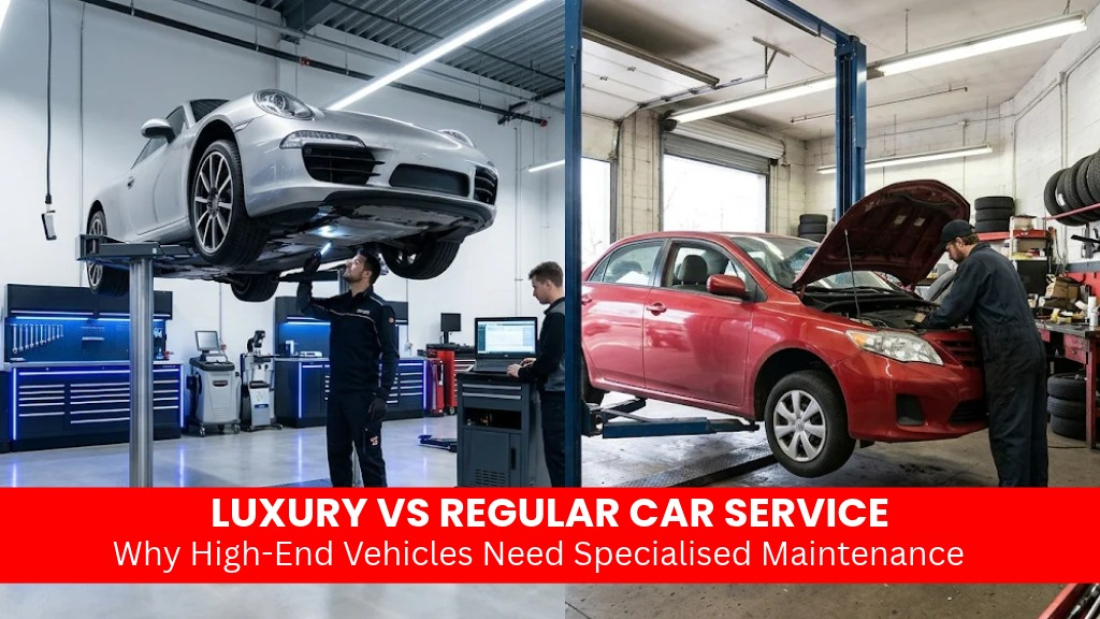
This is why Luxury Car Service is not a bigger version of regular servicing. A standard service covers oil, filters, brakes, and a general check. Those matter, but in a premium vehicle, they are only the starting point.
It is a bit like the difference between a general physician and a specialist: both are qualified, but you would choose each for different problems.
Where Regular Servicing Falls Short:
- Diagnostics: Premium cars depend on manufacturer-level software. Generic scanners read basic fault codes but often cannot reach deeper modules such as adaptive suspension or driver assistance systems.
- Fluids and lubricants: High-end engines work to tight tolerances and need specific oil grades and coolant formulas. A close substitute can affect performance over time.
- Parts quality: An aftermarket part may fit physically but differ from the original in material or calibration. Genuine spares avoid that gap.
- Technician training: Air suspension, turbocharged engines, injectors, EGR systems, and complex transmissions need familiarity that comes from regular hands-on exposure.
- Tools and equipment: Many jobs need brand-specific tools. Without them, even a simple task can damage delicate components.
None of this means regular garages do poor work. For a standard commuter car, they are often the right choice. The car and the workshop just need to match.
What Specialised Luxury Car Maintenance Looks Like:
Specialised Luxury Car Maintenance is less about doing more and more about doing the right things properly.
- Full-system scanning that reads every control module, so small faults are caught before they become repairs.
- Preventive checks on components that wear quietly, such as suspension parts, brake sensors, battery health, and the cooling system.
- Detailed inspection of the AC, electrical, and transmission systems, which are common trouble spots in premium vehicles.
- Regular updates and photos during the service, so you can see what the technician sees.
- Care for finishes, including detailing, polishing, and ceramic coating suited to premium paint and interiors.
These steps can take longer than a quick service, but they tend to reduce unplanned breakdowns, which are usually the costlier surprise.
Choosing a Premium Car Service Centre:
When looking for a Premium Car Service Centre, a few questions help. Does the team work regularly on your brand? Do they use proper diagnostic equipment? Will they explain findings in plain language and show you the worn part?
Alphation Auto, based in Bellandur, Bangalore, is set up around these questions. The centre spreads across more than an acre, uses OEM-trained technicians and genuine spares, and services brands such as BMW, Mercedes, Audi, Porsche, Jaguar, Land Rover, Lexus, and Volvo.
It also offers pick-up and drop-off from your location, which suits owners with busy schedules. The aim is a dealership-like experience with more reasonable pricing.
Frequently Asked Questions:
1. Is luxury car servicing really different from regular servicing?
Yes. The basics overlap, but luxury cars add complex electronics, specific fluids and precise calibration that regular servicing does not usually cover.
2. Will specialised servicing cost much more?
It can cost more per visit because of parts and equipment. Preventive care often reduces larger repairs later, which balances the expense.
3. How often should a luxury car be serviced?
It depends on the make, model, and driving conditions. Many manufacturers suggest once a year or every 10,000 to 15,000 km, but your owner’s manual is the best guide.
4. Can I use a regular garage for minor work?
For small tasks like wiper blades or washer fluid, yes. For diagnostics, engine, transmission, or electronics, a specialist is safer.
5. Does skipping specialised servicing affect resale value?
It can. Buyers of premium cars often look for a clear service history, and gaps may lower the price they offer.
Give Your Car the Attention It Was Built For:
If your car has been serviced like any other so far, there is no need to worry. It is a common habit and an easy one to change. A full diagnostic check is a good first step, because it shows exactly where your car stands today.
Call Alphation Auto at +91 63643 12143 or book online at alphationauto.com to arrange a visit or a pick-up.
Your car has handled every road you have asked of it, so it is fair to give it a workshop that understands how it was made.